

Book an EPC call now via the form below – guaranteed same day call back to confirm booking requirements. Or submit a free contact form to have an agent call you back CLICK HERE
Posted on Google
 Thomas Ivison
Trustindex verifies that the original source of the review is Google.
Brilliant service from Andrew today for our EPC assessment. He was punctual, professional, and thorough while being very respectful of the house. A pleasure to deal with—highly recommend!Posted on Google Lauren FlockettExcellent service, highly recommend, process was very quick and efficient.Posted on Google
 Adam StevensonAndrew was early, which wasn't a problem at all. He was very thorough and professional. The process was explained and he gave a few tips on how to improve. Excellent service throughout.
Key takeaways
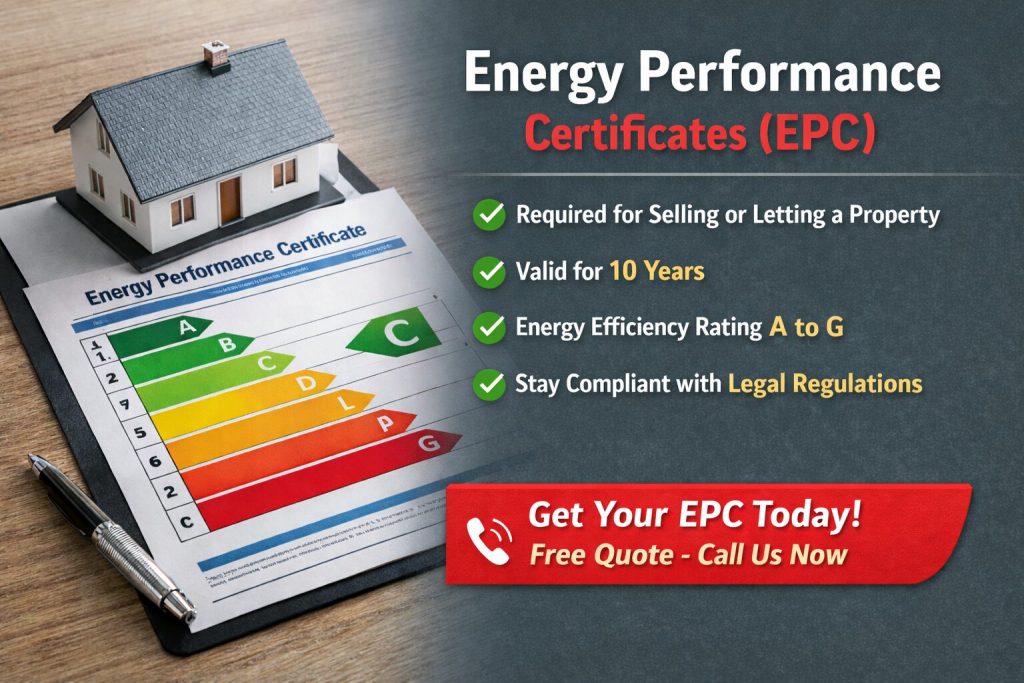
- An energy performance certificate rates a property’s energy efficiency from A (best) to G (worst), as well as recommended improvements.
- It is a legal requirement when selling, renting (landlords must have an EPC with a minimum rating of E), or building a home in the UK.
- EPCs are valid for ten years and cost between £60–£120 to obtain
What is an EPC (energy performance certificate)?
An energy performance certificate (EPC) shows how energy-efficient a property is & recommendations to improve it. We are a Durham based EPC Certificate provider.
If you’re selling or renting a property, you’ll need a valid EPC certificate issued within the last ten years so potential buyers or tenants know how much they can expect to spend on heating and lighting the property before committing to it.
EPC ratings
An EPC rating is a score that measures how energy-efficient a property is. EPC ratings run from A (the most efficient) to G (the least efficient) with points scores corresponding to the lettered ratings.
| EPC rating | Points score |
|---|---|
| A | 92-100 points |
| B | 81-91 points |
| C | 69-80 points |
| D | 55-68 points |
| E | 39-54 points |
| F | 21-38 points |
| G | 1-20 points |
Who produces energy reports & EPCs?
In England EPC certificates can only be produced by accredited Domestic Energy Assessors (DEA).
In Scotland, Energy Performance Certificates can only be produced by government-approved organisations & issued by RICS-registered chartered surveyors. Find out more about the EPC process in Scotland.
How to get an EPC
If you need an Energy Performance Certificate for your home or property, please fill out the contact form under the “contact us”.
You can also search through the EPC certificate ratings of other properties in your area for free. This will help you compare your property’s rating to others in the area – all you need is the postcode.
What happens during the EPC assessment?
A domestic energy assessor will visit the property and take into consideration several factors to determine how energy-efficient your house is.
The assessor will need access to the entire property and will take photographs and measurements. Their checks will include:
- The lighting used, including how many low-energy light bulbs are fitted in the property
- The overall size of the property
- The type of insulation used and how much it is used throughout the building
- The heating systems located on the property, including working fireplaces
- The type of windows used throughout the house.
Most domestic EPC assessments take about an hour to complete.
How much do EPCs cost?
It costs between £36 and £120 to get your property on the EPC register depending on house size.
Does my property need an Energy Performance Certificate?
If you’re looking to sell or rent your property then you need an Energy Performance Certificate.
However, even if you’re not intending to sell your property, getting an EPC is a cheap and quick way to assess the energy-saving potential of your property.
Bear in mind that a lot of newer properties may already have an Energy Performance Certificate, and may also be very energy-efficient.
Prospective landlords looking to rent their property must also have an EPC available for tenants to view. If they fail to produce one, they could face a fine.
Do I need an EPC if I’m buying or renting?
By law, landlords and letting agents are responsible for providing an Energy Performance Certificate for any properties they put up for rent.
If you are renting a property, you are not required to order an EPC. However, you should ask the agent or landlord to show you a valid EPC before you sign a tenancy agreement.
If you weren’t aware of this and have already moved into a rental property, you can still ask your letting agent or landlord to see the property’s EPC. If they fail to produce a valid EPC, you can make a complaint to your local Trading Standards office. If your landlord or letting agent fails to obtain an Energy Performance Certificate, they may face a fine.
How do I get a copy of my EPC?
If you live in rented accommodation you can get a copy of your Energy Performance Certificate by contacting your landlord or letting agent.
If you own the property or would rather get your EPC without contacting your landlord, you can visit the EPC Register website, which stores existing certificates and allows you to check whether an EPC inspector is properly accredited.
To get a copy of the report, you’ll need the Report Reference Number (RNN) or you can search with the property postcode.
New EPC rules for landlords
There are no new EPC regulations for landlords in 2026 to worry about, but both Westminster and Scottish governments are planning new regulations to raise the MEES of all rented properties to lift over one million renters out of fuel poverty. Key proposals for England and Wales include:
- All new properties being put out for tenancy must have an EPC C rating or higher from 2028
- In 2030, all tenancies must adhere to the EPC C minimum rating.
In the meantime, the existing regulations continue to apply: your home must have a valid EPC before it can be let, and it must be given to the tenant. In addition, since April 2020, homes in England and Wales must meet a Minimum Energy Efficiency Standard (MEES) whereby the EPC rating is E or better, unless a valid exemption is registered. No such requirement currently exists in Scotland.
The question of whether you need an EPC for an existing tenancy that’s being renewed isn’t as clear cut, but it’s a good idea to keep the EPC valid to avoid possible arguments, which means renewing it every 10 years.
If you fail to comply with these new rules, then you will be fined or banned from letting out your properties.
How to improve your EPC rating
As a landlord, energy efficiency is no longer something you can ignore. The following step-by-step guide will help you lift your rented property to an EPC C rating in a cost-effective manner:
1. Get an Energy Performance Certificate for the property if you haven’t already. This will provide a score to indicate how far off compliance your property is, along with recommended improvements to lift the property to an EPC C rating.
2. Calculate how many points you’re off, then choose appropriate improvements to raise your rating to the required amount. For example:
| Improvement | Rough cost* | Potential boost to EPC score |
|---|---|---|
| Insulate a previously uninsulated roof with 270mm | £900 | 10-15 points |
| Install wall cavity insulation | £1,000-£4,500 | 5-10 points |
| Insulate your hot water tank | £20-30 | 1.5-2 points |
| Replacing old boiler with new A-rated condensing gas boiler | £3,700 | 4-23 points |
*Costs from Energy Saving Trust and Checkatrade.
3. If you’re planning to rent out an older (pre-1919) home, check out our guide to making a Victorian house more energy efficient.
4. Once the upgrades have been installed, get a fresh EPC assessment and rating.
Energy efficiency in new build homes
Even though regulations requiring new-build homes to be low carbon were scrapped in 2016, existing building regulations mean that newer homes tend to be more energy efficient.
EPC ratings in new builds
According to official government statistics, 88% of new-build homes in England were rated A or B in April-June 2025. A clear majority of homes built since 1990 have an EPC of A, B or C (86%) – this compares to just 23% of homes built before 1919.
According to industry body the Home Builders Federation, the average EPC rating of a new-build home is 86, the equivalent of a B rating.
Common new build energy-efficient features
New builds gain high EPC ratings by implementing some or all of the following measures during construction:
- Loft, wall and floor insulation
- Double or triple glazed windows
- More efficient heating systems, such as heat pumps
- Solar panels and battery storage to help generate more electricity and reduce bills.
Are new build houses always warmer and cheaper to heat?
The design of new build homes and the desire of the government to build more energy-efficient homes means that new builds tend to be much warmer to live in than older properties. According to the Home Builders Federation, a new house’s energy bill is also 57% less. However, it’s worth noting that this is based on an
ideal scenario, with many figures based on the design of a house as opposed to the actual build itself.